Why Choosing the Wrong Contractor Can Cost You More Than Money
For many small businesses, bringing in a contractor is often based on who is available, who seems reliable, or who gives the cheapest quote. However, choosing the wrong one can create far bigger problems than the original job itself. Why small businesses need competent contractors for safe, compliant premises is a crucial consideration for any business owner.
Why contractor vetting matters
For many small business owners, maintenance only becomes a priority when something breaks, leaks, stops working or creates an urgent problem. At that point, the temptation is simple: find someone quickly, get the cheapest quote, and get the job done.
But when it comes to maintaining your premises, equipment, fire safety systems, electrical systems, plumbing, heating, access equipment, or general building fabric, the cheapest contractor is not always the safest or most cost-effective option. Poor contractor selection can lead to unsafe work, delays, repeat repairs, business disruptions, and unexpected costs
A competent contractor does more than turn up with tools. They should have the right skills, training, qualifications, insurance, experience and safe working methods for the job. In addition, whether they are servicing electrical systems, repairing fire doors, maintaining emergency lighting, checking gas appliances, inspecting equipment or carrying out general premises repairs, they need to understand both the technical task and the risks created by their work.
You have a legal futy to appoint competent and safe contractors
For small businesses, this matters because your legal duties do not disappear when you bring in an outside contractor. You still need to take reasonable steps to appoint suitable people, manage risks, keep records and ensure work is carried out safely.
The possible risks of getting this wrong
Unqualified or poorly managed contractors may leave behind unsafe wiring, faulty repairs, blocked fire routes or damaged safety equipment. They may also leave incomplete servicing, poor documentation or hidden defects that only become obvious when something fails. That can lead to accidents, staff injuries, customer complaints, enforcement action, insurance disputes, reputational damage and lost trading time.
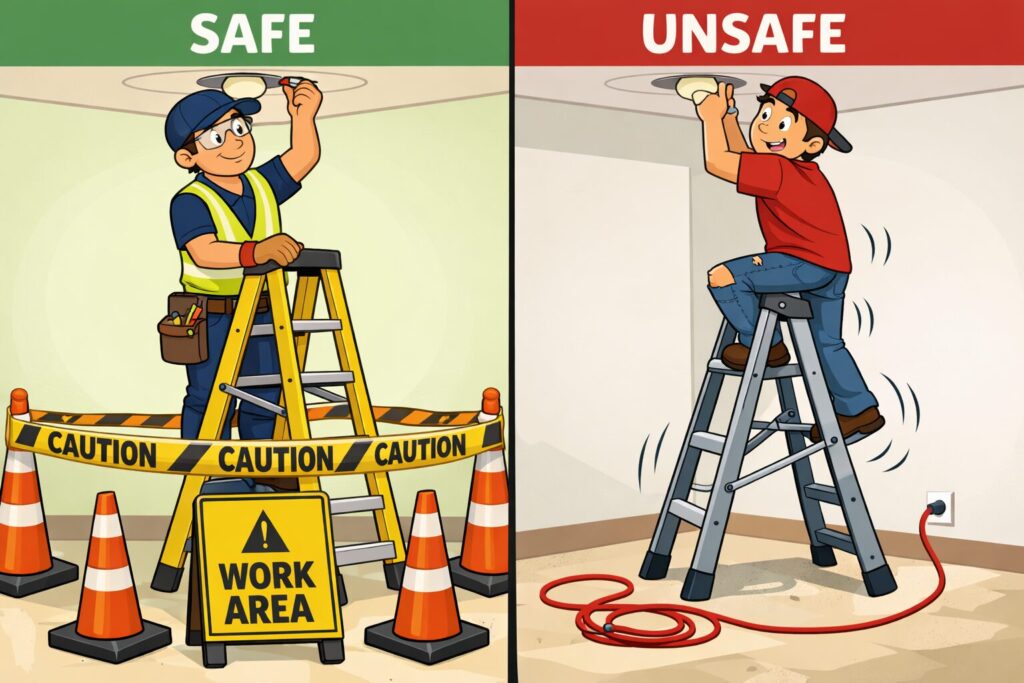
For example, a poorly maintained extraction system in a café could increase fire risk. A badly repaired salon chair could injure a customer. Also, a missed emergency lighting test could leave people unsafe during a power failure. A contractor working without proper controls could create slips, trips, electrical risks or access hazards while your business is still operating.
These are not just “health and safety paperwork” issues. They are business continuity issues. That is why planned preventative maintenance and proper contractor vetting are so important. In fact, a simple contractor management system helps you know who is working on your premises, what they are qualified to do, when key servicing is due, what records you need, and which repairs need urgent action.
Planned Preventative and Reactive Maintenance Preparedness
A good maintenance schedule gives you control. It helps you plan ahead, reduce unexpected breakdowns, manage statutory maintenance duties, budget more effectively and keep evidence ready for insurers, landlords, clients or regulators.
Cost matters, of course. But real value comes from appointing a contractor who delivers quality work safely and right first time. A well-chosen contractor helps you avoid delays, extra costs, and the disruption that can come from poor workmanship or unsafe practices.
Effective vetting can be straightforward. It starts with a few practical checks before work begins. Choose contractors who are competent and hold the right qualifications or certifications for the job. Check they have suitable insurance, and can show that they work in an organised, reliable, and safety-conscious way.
How FHSMCompliance Can Help You to Create a Maintenance Schedule
FHSMCompliance helps small businesses in the North West to put this structure in place without jargon, overkill or unnecessary complexity.
We can help you vet contractors, identify maintenance gaps, review compliance records and create a practical planned and reactive maintenance schedule that reduces risk, protects your premises and helps keep your business running.
Do not wait for a breakdown, accident, failed inspection or insurance query to reveal the gaps. Contact FHSMCompliance today for practical contractor vetting and maintenance compliance support that helps you reduce risk, avoid downtime and stay in control.
A simple vetting process helps you to make better decisions, reduce risk, and protect your business from avoidable problems.
FHSMCompliance has over 30 years of experience dealing with contractor selection and performance. We can help small businesses to put practical contractor vetting systems in place. So you can choose with more confidence and reduce financial, safety, and operational risk.
Leave a Reply